A calmer family routine rarely begins with a dramatic declaration that all screens are gone. It begins with noticing a moment that is not working: dinner keeps getting interrupted, bedtime slips, or nobody can put a device down without an argument.
Choose that moment first. A plan for one part of the day is easier to understand and adjust than a rule meant to fix everything at once.
Screens can support learning, friendship, creativity, accessibility, and play. They can also crowd out things a family values. A useful plan considers both.
Look at the child and the context
The American Academy of Pediatrics describes five useful questions through its “5 Cs”: the child, the content, calming, what media crowds out, and communication. This moves the discussion beyond treating every minute and every child as interchangeable. See the AAP guide to the 5 Cs.
For your household, ask concrete questions. Is the activity a video call with a grandparent, a creative project, homework, or endless recommendations? Does it usually end comfortably? What happens to sleep, movement, shared meals, or other responsibilities around it?
A single difficult transition does not establish an addiction. Look for patterns and talk with your child’s clinician when concerns are persistent or interfere with daily life.
Make the agreement together
The AAP’s family media plan guidance recommends tailoring agreements to the household and revisiting them. Shared expectations and adult example matter.
Try a short conversation when nobody is in the middle of being told to stop:
- What do we enjoy doing with devices?
- Which part of the day feels rushed or disconnected?
- What would we like more time for?
- What small change could everyone try this week?
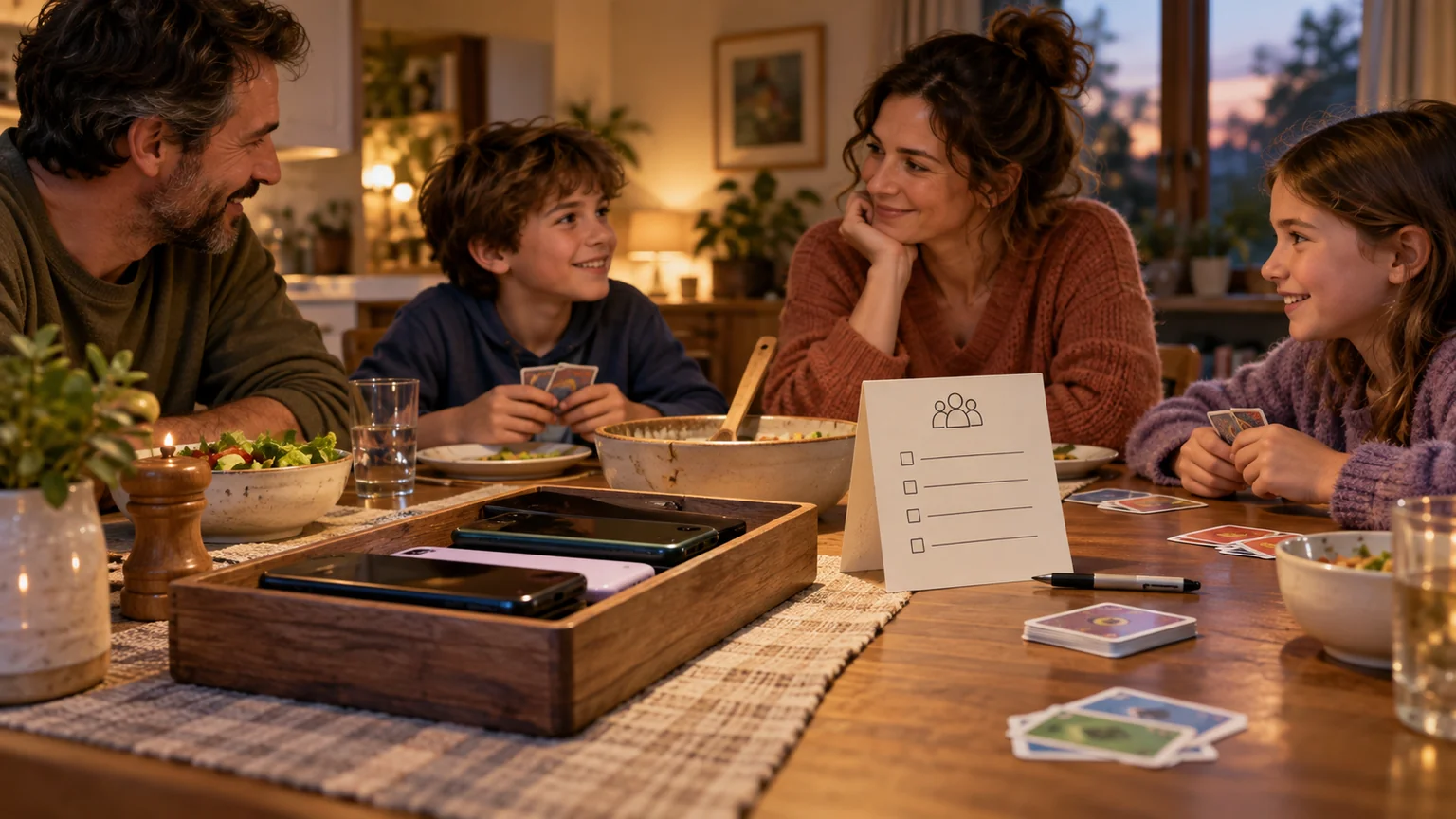
Adults need a rule too. If dinner is device-free, explain unavoidable exceptions before they become a running excuse.
Replace the interruption with an invitation
“Stop watching” ends an activity. It does not provide another one.
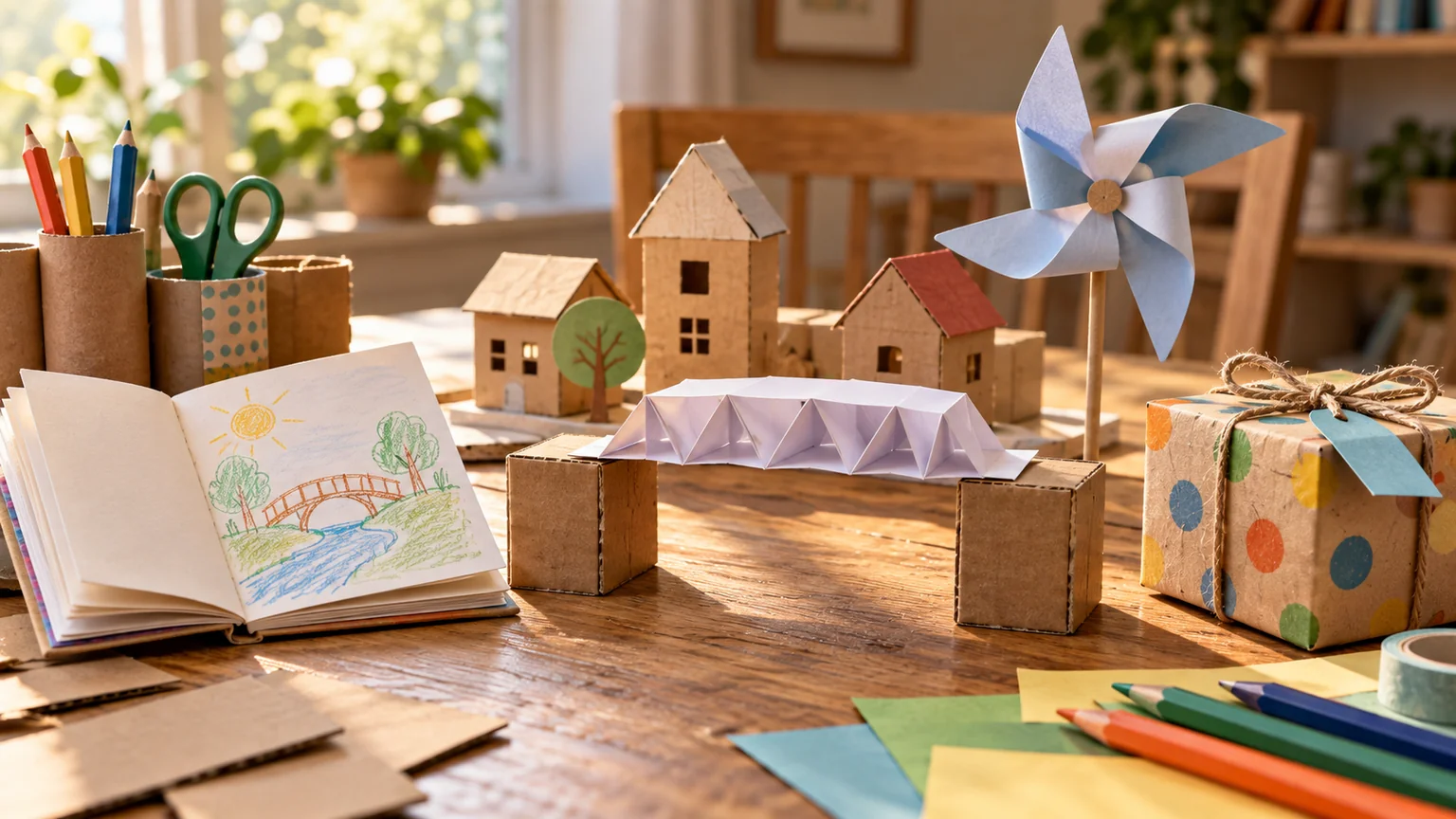
Make the next step visible and small: a basket of paper and pencils, a short walk, food preparation, a puzzle left on the table, or ten minutes building something together.
This is not a promise that a craft project will transform behavior. It simply reduces the work of deciding what comes next.
Offer a real choice within the routine. A child who dislikes drawing might want to arrange ingredients, invent a game, sort materials, or dictate a story. Participation should not require every child to enjoy the same activity.
Make transitions predictable
Agree on stopping points before starting. An episode ending, a saved game, or a completed call is easier to understand than an unexpected demand.
Give an appropriate reminder and help the child close the activity. If a game cannot pause, discuss that before choosing when to play it. Turn off optional autoplay or notifications together when those features are making the agreement harder to follow.
Avoid turning every hard transition into a debate about character. Stay with the immediate boundary and return to the broader conversation when everyone is calmer.
Build a realistic week
Use a plan with room for different days:
| Moment | Trial agreement | Practical support |
|---|---|---|
| A shared meal | Devices stay away from the table | Adults name any necessary exception |
| After school | Decompress before demanding a project | Offer quiet time as well as movement |
| Before bed | Choose a predictable wind-down routine | Prepare the next activity in advance |
| A weekend afternoon | Make one thing together | Keep materials ready and the scope small |
These are examples to adapt, not universal time prescriptions. Age, disability, schoolwork, work schedules, and family circumstances change what is workable.
Review without turning it into a scorecard
After a week, ask whether the targeted moment is easier. Did the plan make room for something you value? Did anyone find it confusing or unfair? Was the activity too ambitious for the time available?
Keep what helped. Change what did not. You are designing a routine that people can live with.
The 30-day making challenge offers a menu of small activities. Use one, several, or all of them. Missing a day does not erase the afternoon you spent together.
Keep a good idea close.
Follow Command Post